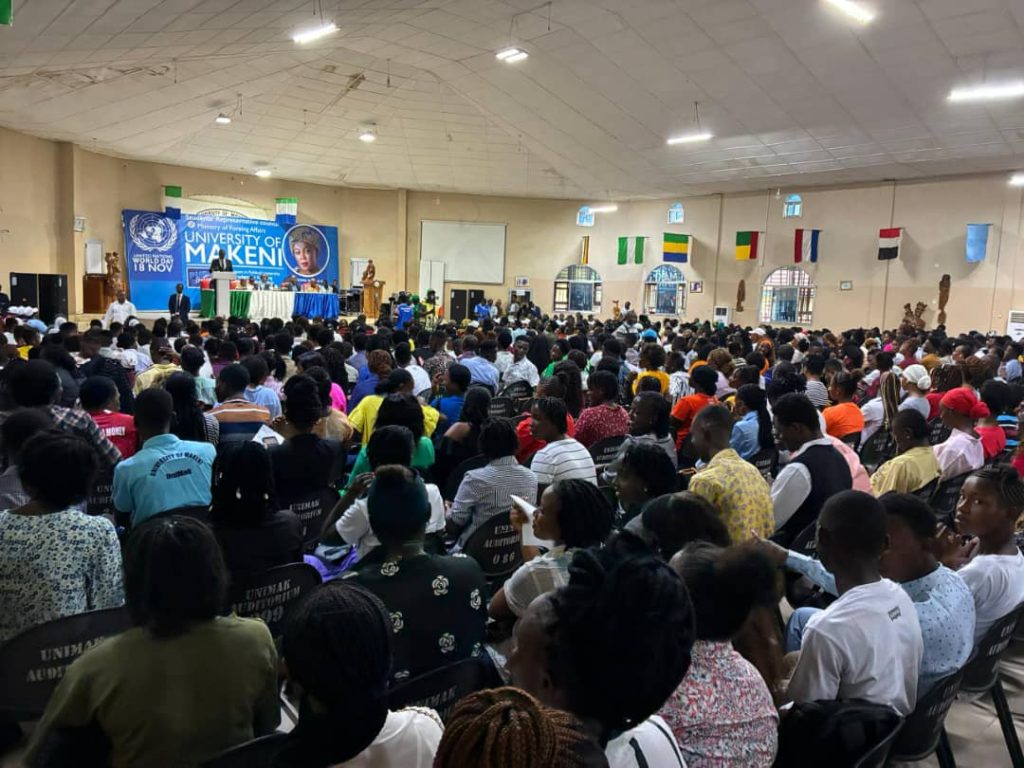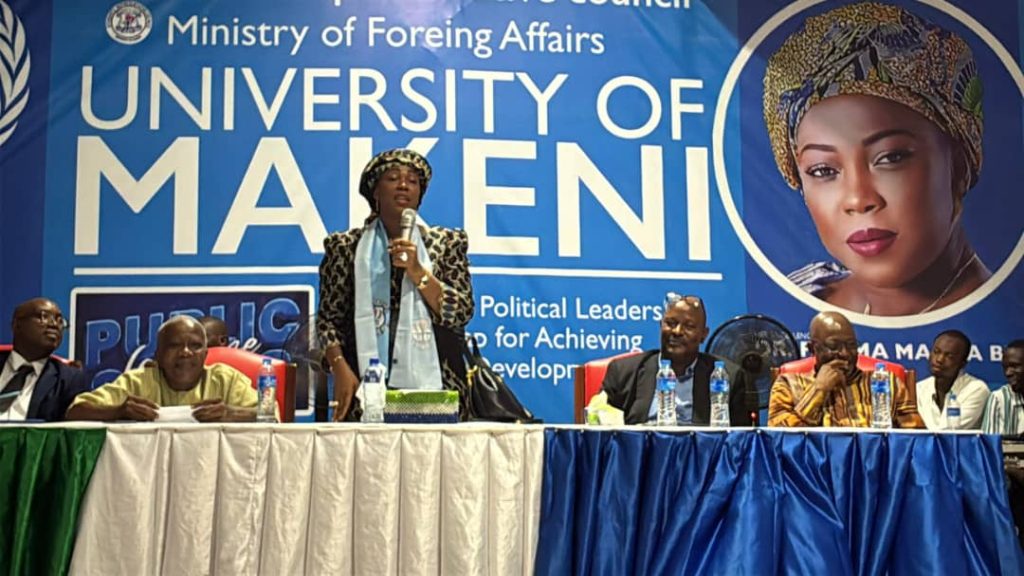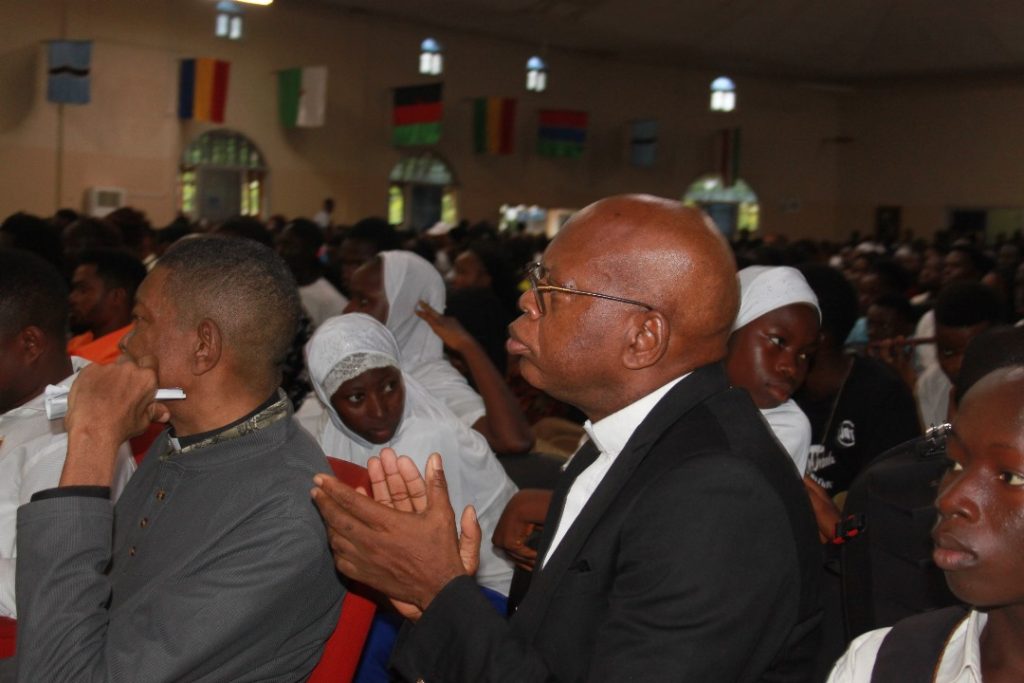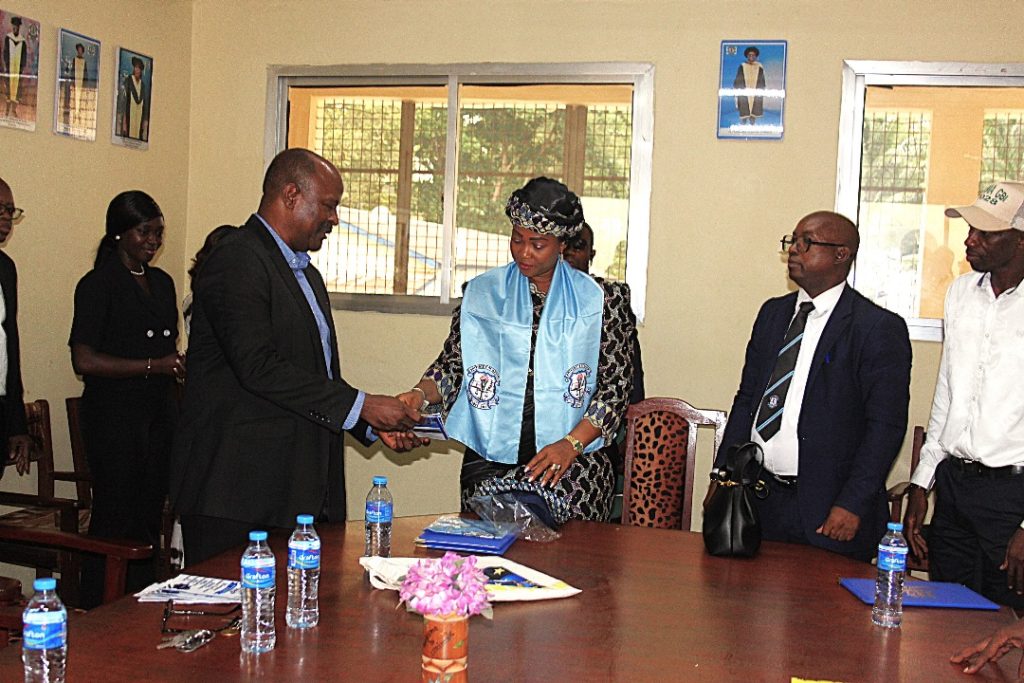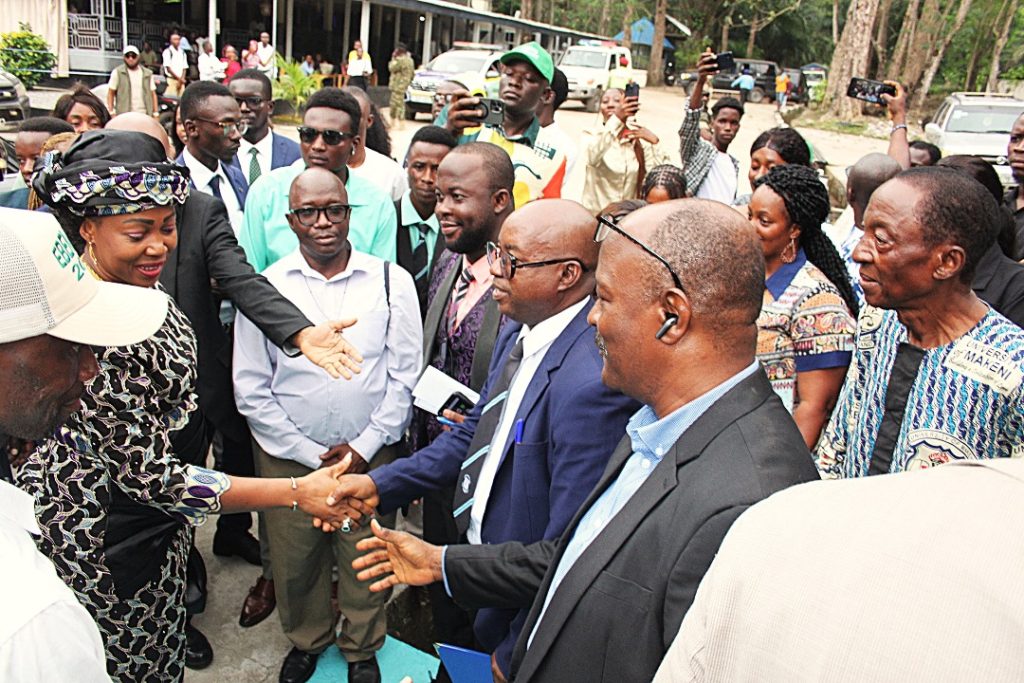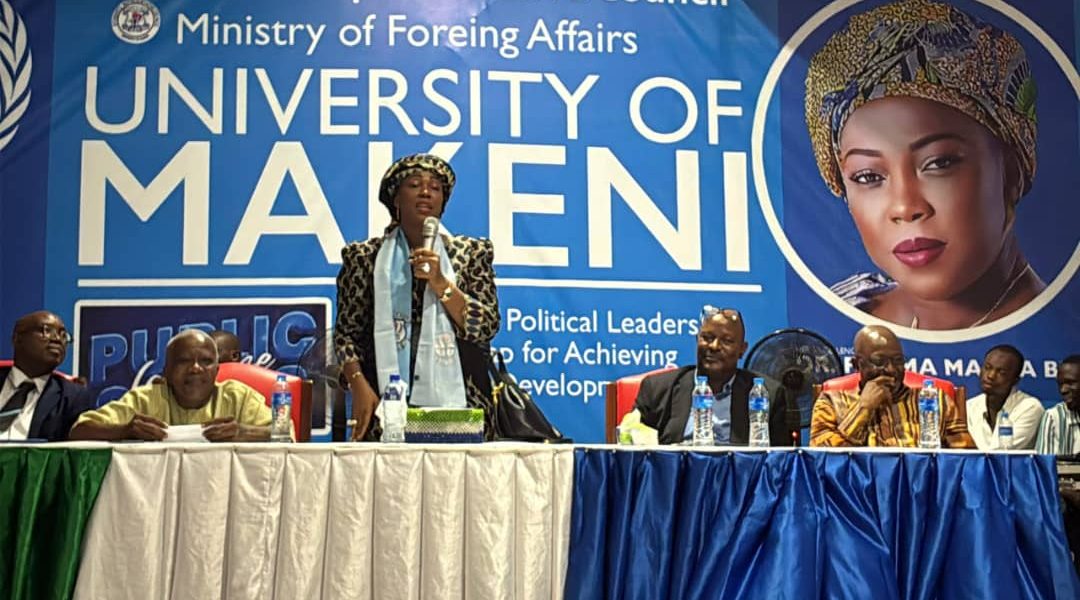
First Lady of Sierra Leone, Fatima Maada Bio, delivered a powerful public lecture at the University of Makeni (UNIMAK), emphasizing that feminism is a cornerstone for sustainable development and national progress. Welcomed by key figures including Registrar Foday Bangura and Resident Minister Ibrahim Jalloh, the First Lady was lauded for her impactful leadership, characterized by purpose, courage, and empathy. The lecture, introduced by Master’s student Dadida Jalloh, was celebrated as a contribution to the intellectual development of Sierra Leone. In a clear message of neutrality, UNIMAK leadership stressed that the institution provides a neutral ground for dialogue, free from political affiliation, aiming to foster respect and equality within the academic landscape.
Mrs. Bio’s address redefined feminism as an essential call for universal opportunity, stating, “Feminism is about the opportunity to contribute to national development… No country can develop without women’s empowerment.” She passionately argued that empowering women directly reduces poverty and boosts national productivity, emphasizing that the movement is not about sidelining men but about strengthening society through gender equality. Her message resonated with the audience, urging students—whom she called the “leaders of today”—to be bold, brilliant, and to actively challenge harmful norms. She specifically called on universities to become grounds for equality, where women’s voices are respected in the classroom.
The lecture culminated in a lively question-and-answer session where the First Lady provided practical advice on governance and personal dignity. While acknowledging the need for traditional practices and governance to work together, she stressed that governance requires practicality. Her firm closing advice to the women in the audience was poignant: “Don’t trade your dignity as a woman.” She concluded by encouraging all attendees to ensure that respect for women begins at home and to create space for others to climb with them, reinforcing her overarching theme of inclusive growth and justice that has defined her public service, notably through the “Hands Off Our Girls” campaign.