
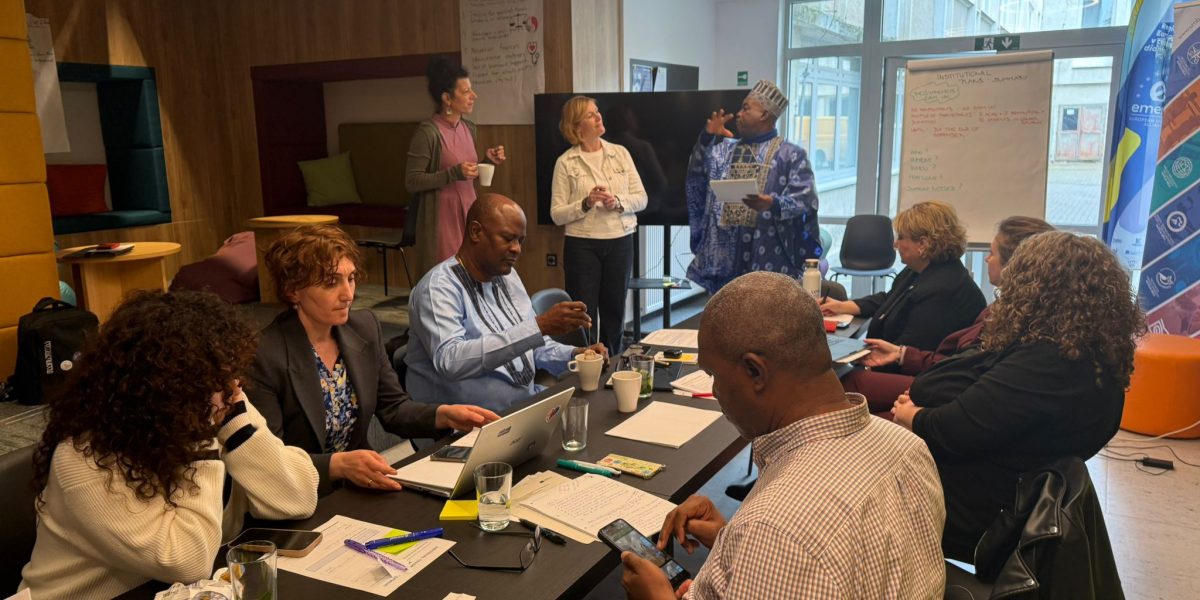
Banská Bystrica, Slovakia, 11–15 May 2026 – Representatives of partner universities under the ENHANCE-GSL project participated in a five-day Training of Trainers in Community Engagement, hosted by Matej Bel University in Banská Bystrica. The program was part of a wider effort to strengthen the capacity of higher education institutions in Sierra Leone and Georgia to develop sustainable, structured, and mutually beneficial relationships with the communities they serve.
The Training of Trainers was organized under the ENHANCE-GSL project, “Enhancing Capacities for Sustainable Community Engagement: Cases of Georgia and Sierra Leone.” The project, supported by the European Union through the Erasmus+ Capacity Building in Higher Education program, brings together universities from Sierra Leone, Georgia, Slovakia, and Croatia.
For the University of Makeni (UNIMAK), participation in the training marked an important stage in its ongoing efforts to strengthen community engagement as an institutional responsibility. The program equipped participants with practical knowledge and skills they could share with colleagues and students upon their return to Sierra Leone. Rather than focusing solely on individual learning, the Training of Trainers approach was designed to create a multiplier effect by preparing participants to train others within their own universities.
Building Capacity for Community-Engaged Higher Education
The five-day program focused on developing participants’ understanding of community engagement, community-engaged teaching and learning, service-learning, partnership building, facilitation, and reflection and evaluation. Participants were encouraged to examine how universities can move beyond traditional outreach activities towards deeper, more reciprocal relationships with communities.
One of the key lessons from the training was that community engagement should not be reduced to universities going into communities to provide services. Effective engagement requires dialogue, mutual respect and shared responsibility. Communities should be involved in identifying their priorities, planning activities, implementing interventions, and evaluating results.
This approach recognises that universities and communities each possess valuable knowledge. Universities bring academic expertise, students, research skills, and institutional resources, while communities contribute local knowledge, practical experience, social networks, and an understanding of their needs and assets. Sustainable engagement therefore requires both sides to work together as partners.
Participants reflected on how this principle could be applied within their own institutions. For universities such as UNIMAK, which already had experience of outreach, student volunteering, health sensitization, educational support, and other community activities, the training provided an opportunity to rethink how such initiatives could become more participatory, more structured, and more closely linked to teaching and learning.
Training Participants to Become Trainers
A distinctive feature of the program was its focus on preparing participants to become trainers and facilitators, rather than simply recipients of information.
Throughout the week, participants explored ways to design and deliver effective training on community engagement. They were introduced to participatory teaching methods, facilitation techniques, group work, reflection exercises, and ways to encourage active participation among learners.
The program also provided participants with opportunities to practice what they learned. Through group presentations, peer learning, and micro-teaching exercises, participants developed and tested their training approaches. Feedback from facilitators and fellow participants helped them improve their communication, facilitation, and presentation skills.
This aspect of the program was particularly important for the sustainability of the ENHANCE-GSL project. On returning to their home institutions, participants were expected to share the knowledge and skills acquired in Slovakia with academic staff, administrators, and students. In this way, the benefits of the training would extend beyond those who physically attended the program.
For UNIMAK, this multiplier approach supports the broader objective of strengthening institutional capacity for community engagement across faculties and departments.
Linking Community Engagement to Teaching and Learning
Another major area of focus was community-engaged teaching and learning.
Participants explored ways academic programs can connect to practical community experiences so students not only learn theories in classrooms but also have opportunities to apply their knowledge to real social challenges.
Through community-engaged learning, students can work with communities while achieving clearly defined academic and learning outcomes. For example, education students may provide literacy and learning support in schools; business students may support entrepreneurship and financial literacy activities; health-related students may participate in health awareness campaigns; and students from different disciplines may contribute to environmental sanitation and climate action initiatives.
Such experiences benefit both students and communities. Students develop practical skills, confidence, leadership, communication, teamwork, and civic responsibility, while communities gain access to knowledge, services, and additional human resources.
The training encouraged participants to think carefully about how to integrate community engagement into curricula rather than treat it only as extracurricular volunteering. When community engagement is connected to academic learning, students have a stronger opportunity to reflect on their experiences and understand how to use professional knowledge responsibly in society.
Learning Through Reflection
Reflection was another important theme throughout the program.
Participants learned that community engagement does not end when an activity is completed. Students, staff, and community partners need opportunities to reflect on what happened, what was learned, what worked well, what challenges were encountered, and what should be done differently in the future.
Reflection can take different forms, including group discussions, journals, presentations, mentoring sessions, and structured feedback activities. It helps students connect practical experience with academic learning while also helping institutions improve the quality of future engagement.
For UNIMAK, this emphasis on reflection was particularly useful because it reinforced the idea that community activities should be documented, reviewed, and used as opportunities for institutional learning.
Exposure to Practical Community Engagement
The program also provided opportunities for participants to learn beyond the formal training room. Exposure to examples of community engagement in the Slovak context allowed participants to see how universities and community organizations can work together in practice.
These experiences encouraged participants to compare approaches used in Slovakia with the realities of their own institutions and communities. The goal was not to copy European models directly but to identify principles that could be adapted to different social, cultural, and institutional contexts.
For Sierra Leonean participants, this was particularly important. Community engagement in Sierra Leone must respond to local realities, including challenges related to education, public health, youth development, unemployment, environmental sanitation, and community development.
The training therefore promoted adaptation rather than imitation. Participants were encouraged to take useful ideas from the Slovak experience and consider how they could be modified to suit their own communities and institutional structures.
International Learning and Partnership
The training of trainers also created an important space for international exchange.
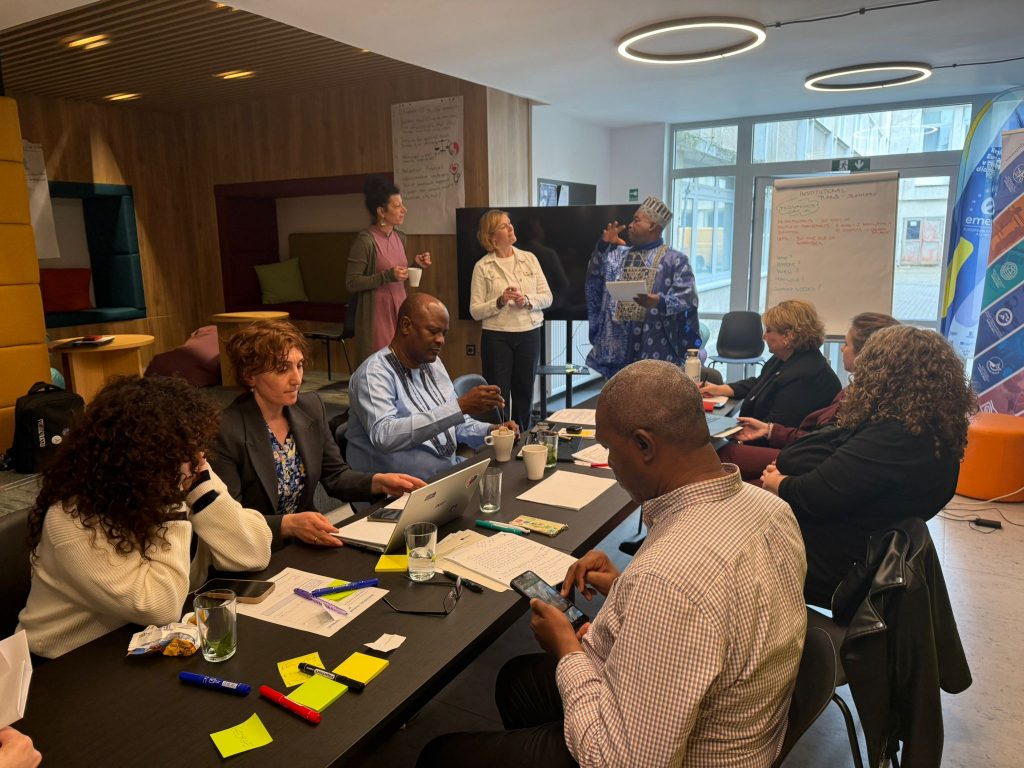
Participants from Sierra Leone and Georgia worked alongside facilitators and colleagues from Slovakia and Croatia. This brought together people from different educational systems, cultures and community contexts, but with a shared interest in strengthening the relationship between universities and society.
Formal training sessions were complemented by informal conversations, networking and cultural exchange. Participants had opportunities to discuss the realities faced by their institutions, share examples of successful practices, and explore possible solutions to common challenges.
Despite differences between countries, many institutions face similar barriers to sustainable community engagement. These include limited funding, staff workload, lack of formal recognition, insufficient monitoring systems, and the tendency to treat community activities as occasional outreach rather than a core university responsibility.
The training helped participants recognize that these challenges can be addressed gradually through stronger institutional structures, supportive policies, staff development, student participation, and long-term community partnerships.
Importance for the University of Makeni
For the University of Makeni, the Slovakia training was closely connected to the wider institutional changes being supported through ENHANCE-GSL.
One of the most important developments has been the establishment of a Community Engagement Unit at the university with support from the project. The unit provides a focal point for coordinating community engagement activities, strengthening partnerships, supporting students and staff, documenting activities, and promoting sustainability.
The knowledge gained during the Training of Trainers strengthened the capacity of those involved to support the work of this unit and to promote community-engaged approaches within different parts of the university.
The training also complemented practical student-led activities implemented through the project. These have included the Student Community Health Awareness and Advocacy Campaign, the Student Community Entrepreneurship and Skills Development Programme, the Student-Led Environmental Sanitation and Climate Action Initiative, and the Student-Led Community Literacy and Learning Support Programme.
These activities demonstrate how the principles discussed in Slovakia can be translated into practical action. Students work with communities, apply classroom knowledge, respond to identified needs and develop skills that prepare them for professional and civic life.
From Training to Institutional Change
The long-term value of the Training of Trainers will depend on what happens after participants return to their universities.
The intention is that trained participants will support further capacity building among colleagues and students, contribute to the development of community engagement guidelines and help strengthen relationships with community partners.
At UNIMAK, this means continuing to move from isolated activities towards a more coordinated and institutional approach. Community engagement should increasingly become part of teaching, research, student development and the wider mission of the University.
The training therefore contributed not only to individual professional development but also to institutional change. Participants returned with new knowledge, practical tools, facilitation skills and a stronger understanding of how community engagement can become embedded within university structures.
Sustaining the Gains Beyond the Project
Sustainability was a recurring concern throughout the programme.
International projects eventually come to an end, but community needs and university responsibilities continue. For this reason, ENHANCE-GSL has placed strong emphasis on building local institutional capacity that can survive beyond external funding.
The Training of Trainers is one way of achieving this. By developing internal trainers, universities can continue building the skills of staff and students without depending entirely on external experts.
For UNIMAK, sustainability will also require continued support for the Community Engagement Unit, integration of engagement activities into institutional planning, continued partnerships with communities and organisations, and gradual provision of university resources for community programmes.
Challenges such as transport, funding, staff workload and monitoring remain, but the training provided participants with a stronger foundation for addressing them.
A Significant Step in the ENHANCE-GSL Journey
The Training of Trainers held in Banská Bystrica from 11–15 May 2026 represented a significant milestone in the ENHANCE-GSL project.
It brought together partners from different countries, strengthened professional and institutional capacities, and reinforced the principle that universities have an important responsibility to connect knowledge with society.
For the University of Makeni, the experience was particularly valuable because it supported the University’s ongoing effort to make community engagement more organised, participatory and sustainable.
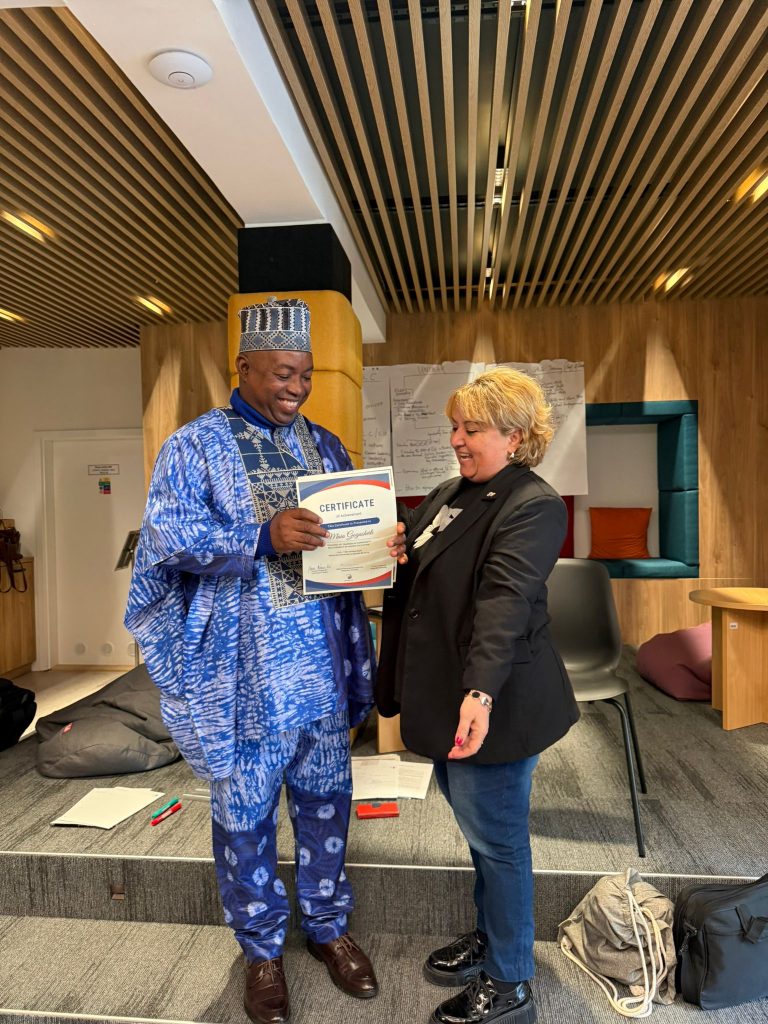
Participants returned from Slovakia with more than certificates of participation. They returned with practical training skills, new perspectives, professional networks and a responsibility to share what they had learned.
The true success of the programme will therefore be seen in the months and years ahead: in the colleagues who are trained, the students who participate in community-engaged learning, the partnerships that are strengthened and the communities that benefit from more responsive university engagement.
The Slovakia experience demonstrated that community engagement is not simply about universities serving communities. It is about universities and communities learning, planning and working together. Through that partnership, higher education can become more relevant to society while also preparing students to become knowledgeable, responsible and socially engaged citizens.
For UNIMAK, the Training of Trainers was another important step toward ensuring that community engagement becomes a lasting part of the University’s identity and its contribution to the development of Sierra Leone’s development.